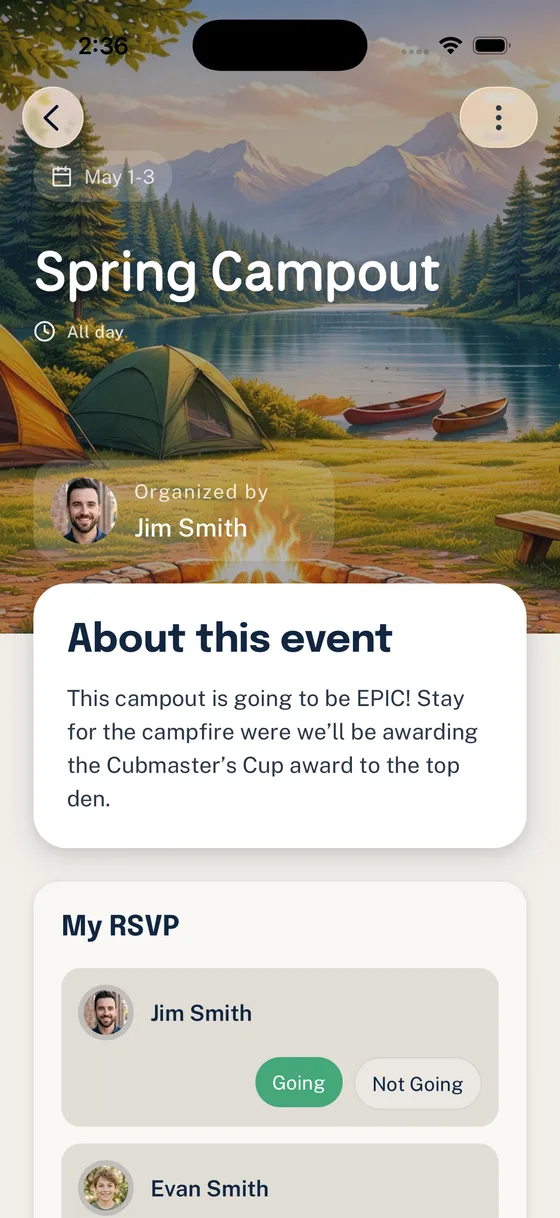
Use this guide when a Scouts BSA troop is ready to make Woggle the practical home for coordination around troop life. The point is not to replace youth leadership, Scoutbook, advancement records, or unit policy. The point is to put the next Event, RSVP, volunteer ask, patrol update, and parent-visible reminder where families and leaders can act on it.
What You Will Do
- set up troop-wide, patrol, committee, and adult-leader spaces
- choose visibility settings that match who needs the update
- publish a first troop Event with clear outing details
- ask Households to RSVP in the Event
- attach adult coverage or logistics roles to the Event
- send Announcements that point families back to the right Event or Group
Woggle is a coordination layer. Keep advancement, official records, medical forms, permission slips, Youth Protection training, and council or unit requirements in the approved systems and processes your troop already uses.
Before You Start
Gather enough information to make the first setup recognizable:
| Prepare this | Use it for |
|---|---|
| Troop name and common shorthand | Naming the Unit families recognize |
| Active patrol list | Creating patrol Groups without overbuilding |
| Adult leader and committee roles | Deciding which adults need working spaces |
| Next real troop outing | Anchoring rollout around an Event |
| RSVP deadline | Giving families a clear first action |
| Adult coverage needs | Creating specific volunteer roles |
| Current family channel | Pointing families to Woggle without duplicating the whole plan |
If the roster is imperfect, start with active families and the next outing. You can clean up patrol transfers, second guardians, and edge cases after the first useful workflow is live.
Step 1: Map the Troop Spaces
Start with the structure people already understand:
- whole troop
- active patrols
- troop committee
- adult leaders
- event teams only when the work will repeat
Do not create a Group for every temporary side conversation. A patrol that meets, plans, and receives targeted reminders deserves a Group. A one-time campout question may only need an Event note or Announcement.

For a deeper setup walkthrough, use How to set up Groups and Channels.
Step 2: Set Channel Visibility
Troop communication often has different audiences: youth members, parents and guardians, patrol members, adult leaders, and committee volunteers. Set each Group or Channel around the people who need the update and the adults who need visibility.

Keep safety-sensitive claims narrow. Woggle can support clearer visibility and official unit spaces, but it does not decide your troop’s communication policy or guarantee compliance. Verify current Scouting America, council, chartered organization, and unit expectations before changing how adults and youth communicate.
Step 3: Build the First Event
Choose a real Event families already care about: a campout, hike, service project, court of honor, troop meeting, PLC-adjacent planning night, or parent orientation. A real outing teaches the habit faster than a test post.
Include the details families usually ask for:
- who should attend
- date, start time, end time, and location
- departure, return, parking, or pickup notes
- uniform, gear, food, cost, and form reminders
- whether adults or drivers are needed
- RSVP deadline
- volunteer roles or coverage needs
- where updates will be posted
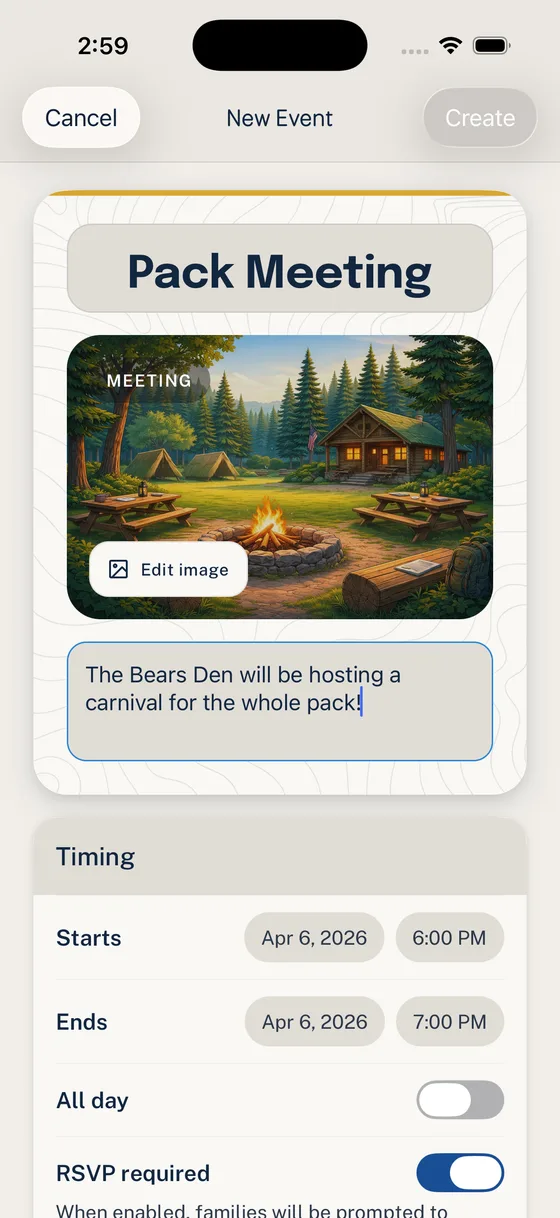
Use a troop-wide audience for troop outings. Use a patrol Group for patrol-specific meetings or reminders. For a step-by-step Event workflow, read Run Your First Event End to End.
Step 4: Ask for Household RSVPs
For many troop activities, leaders need a Household-level answer. A parent may need to confirm one Scout, two siblings in the troop, an adult driver, or a guardian who can attend part of the outing.
Ask families to open the Event and RSVP for the people in their Household who are attending.

Say plainly whether adults, siblings, guests, drivers, or youth-only attendance should be included. If the count affects transportation, supervision, forms, cost, or official attendance, verify the required process outside Woggle and point families to it from the Event.
Step 5: Add Adult Coverage Roles
Troop outings often need adult jobs to become visible before the last reminder: driver, trailer pickup, campsite check-in, meal support, merit badge station, court of honor setup, refreshments, cleanup, or service project supply lead.
Attach those roles to the Event instead of asking in a separate thread.

For roles tied to supervision, transportation, or policy-sensitive work, Woggle should hold the coordination ask, not the policy decision. Confirm training, eligibility, two-deep leadership, transportation expectations, and unit approval through your troop’s normal process.
Step 6: Send Targeted Announcements
Use Announcements for updates that should stay findable after the notification: RSVP deadlines, departure reminders, rain plans, patrol-specific preparation, committee notes, or a change to the Event.

Write the Announcement as a short action note, then link the family back to the Event or Group where the full context lives.

For the detailed Announcement flow, use Send an Announcement in Woggle.
Parent Rollout Note
Use this in your current family channel when the troop is ready to start:
Keep the first message practical. Families do not need every feature explained before they complete the first RSVP.
Check Your Troop Setup
Before asking families to rely on Woggle, confirm:
- the Unit name looks like the troop name families recognize
- patrol Groups use plain-language names
- adult leader and committee spaces include the right adults
- Channel visibility matches the audience and your troop’s expectations
- the first Event uses the correct troop or patrol audience
- the Event has date, time, location, RSVP deadline, and outing notes
- RSVP instructions say whether adults, drivers, siblings, or guests should be included
- volunteer roles are specific and attached to the Event
- Announcements point back to the Event instead of copying the whole plan
- official records, advancement, forms, safety rules, and policy requirements stay in the approved systems
Common Mistakes
Treating patrol Groups like private side chats
Patrol spaces should still respect your troop’s adult visibility and communication expectations. Set them up as official troop coordination spaces, not disconnected threads.
Using Woggle as a second Scoutbook
Keep advancement, official records, and required Scouting workflows in the systems your troop is expected to use. Woggle should clarify coordination around those activities, not create a shadow record.
Duplicating every detail in the old channel
During rollout, the old channel can point families to Woggle. If leaders keep copying the full plan back into text or email, families learn that Woggle is optional.
Sending every update to the whole troop
Troop-wide updates are useful when everyone needs the information. Patrol, committee, and adult-leader updates should use the right Group so families only see what they can act on.
What Woggle Is Not
Woggle is not a replacement for Scoutbook, official Scouting records, advancement tracking, medical forms, permission slips, Youth Protection training, two-deep leadership expectations, or unit and council policy. It can help troop leaders make coordination more visible and easier to follow, but leaders should verify current official guidance and use the systems their unit is required to use.
Next Step
Publish one real troop Event and ask families to use it for the current plan and Household RSVP. For outing scenarios and troop-level product questions, see Woggle for Scouts BSA.