
A Scout term, a Scout tradition, and our name
What is a Woggle?
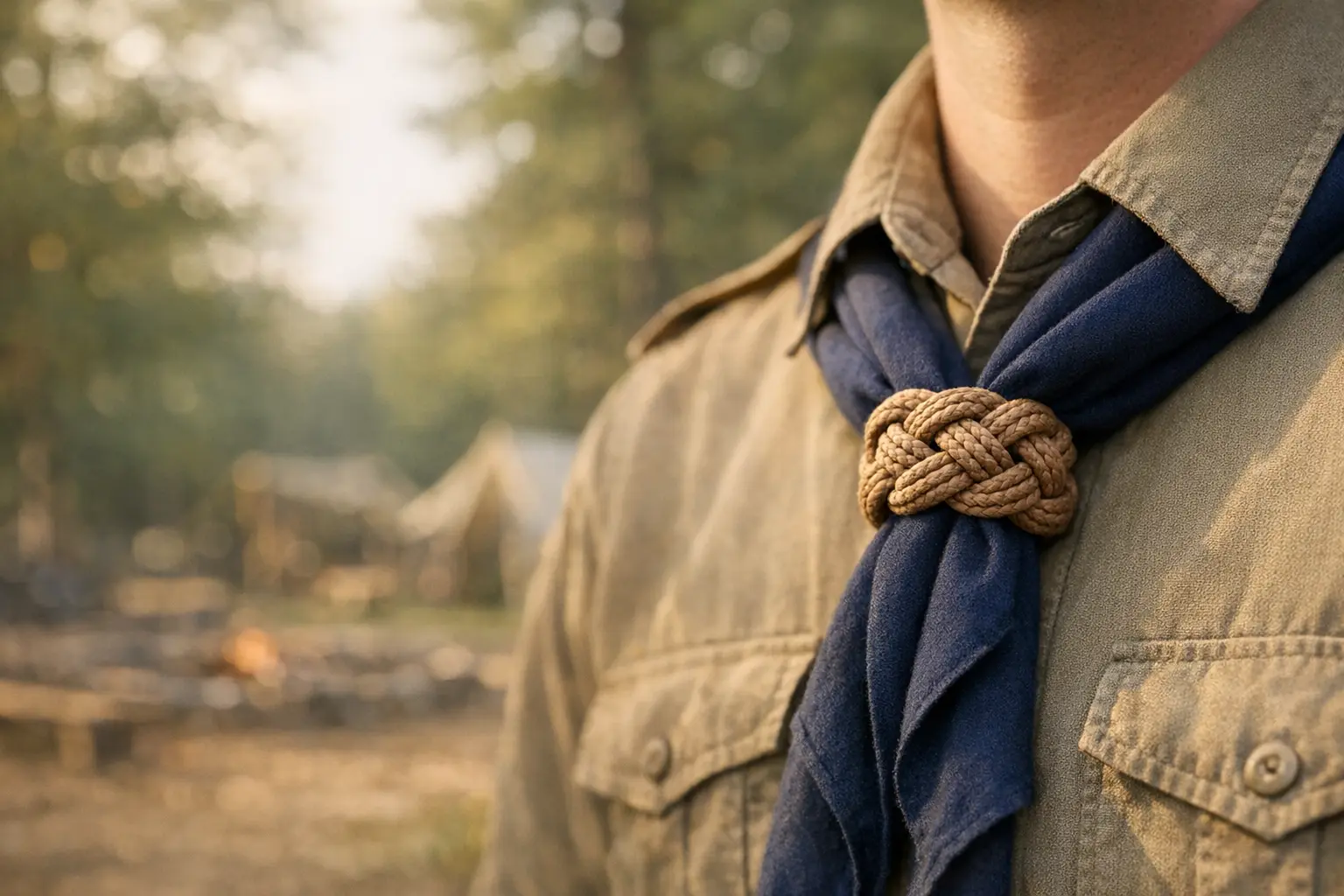
A woggle is the ring or slide that holds a Scout neckerchief in place. In the United States, most families simply say neckerchief slide. We chose Woggle because the app is meant to keep unit communication and planning from coming loose.
- In U.S. units, the usual term is neckerchief slide.
- The printed word woggle shows up in Scout history by June 1923.
- The name still carries Gilwell and Wood Badge associations.
Shown in use
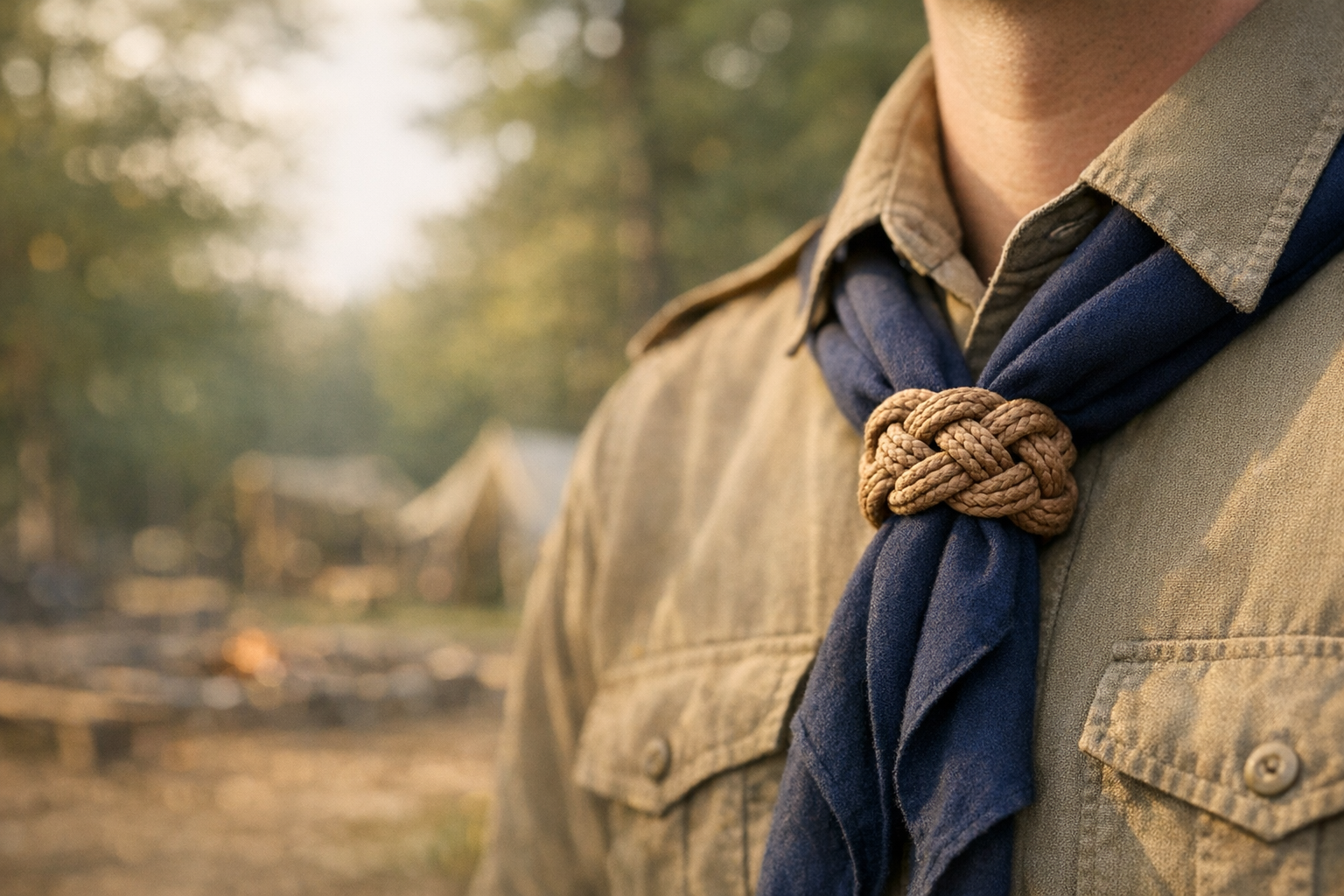
A woggle is still easiest to understand when you see it in use on a neckerchief.
Definition
What a woggle does
A woggle is the ring or slide worn at the neck to secure a Scout neckerchief without tying a knot.
In many Scout communities, woggle is the everyday term. In Scouting America materials, the same part of the uniform is usually called a neckerchief slide.
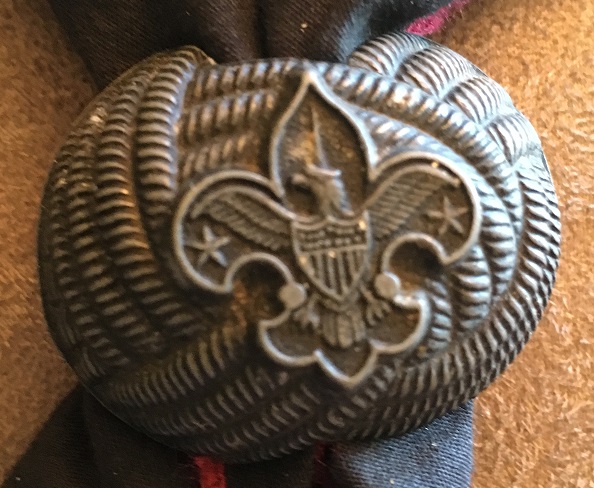
The familiar BSA metal slide is a stylized metal rendering of the same interwoven Turk's head form, not a separate idea.

- Often leather, cord, wood, bone, plastic, or metal
- Commonly handmade at the troop or pack level
- The classic knot form still shows up in both handmade and metal versions
Metal version
The standard Boy Scout slide follows the same knot idea
This modern metal Boy Scout neckerchief slide simplifies the Turk's head into a stamped, interwoven form.
A modern BSA metal slide rendered as a simplified Turk's head-inspired form.
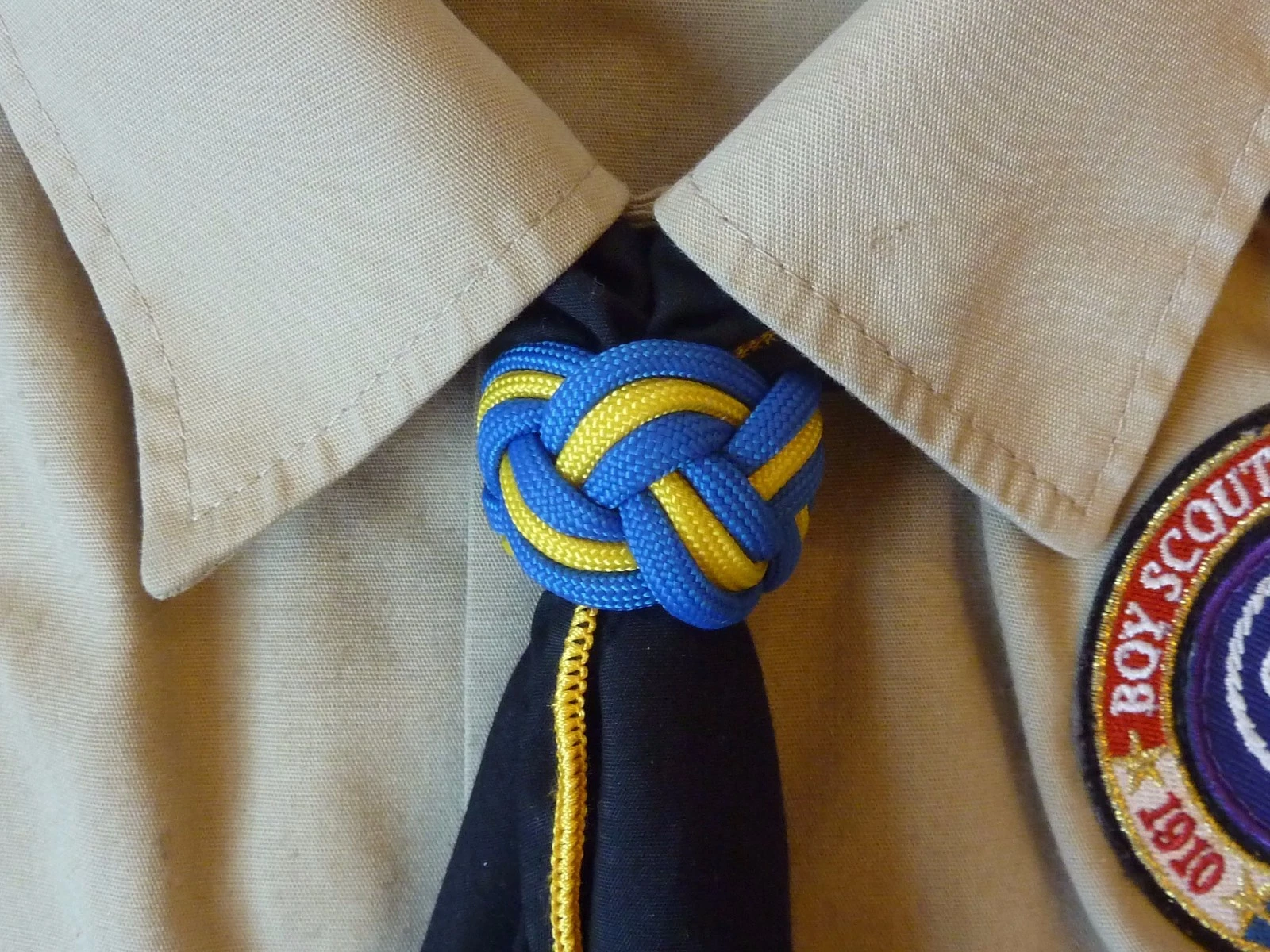
Classic Turk's head
A simple ring that became a Scout symbol
The best-known woggle form is the Turk's head knot: practical, handmade, and closely tied to Gilwell tradition.
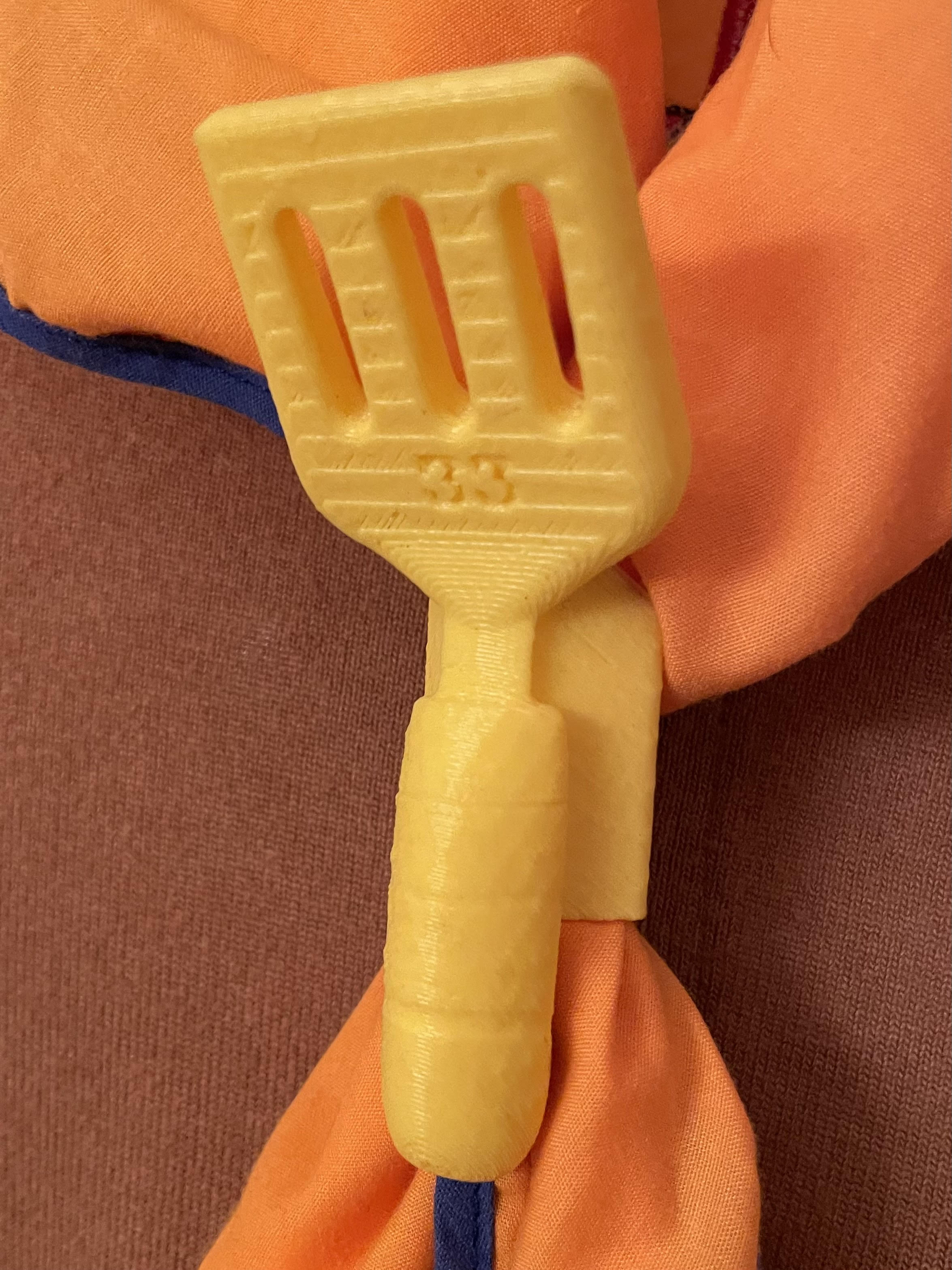
Carved and novelty slides
Not every woggle is a knot
Slides also get carved, whittled, cast, or improvised from everyday objects. That making tradition is part of what keeps Scout slides personal.
A few useful details
Why the term matters
The word has lasted because it points to more than one piece of uniform hardware. It carries history, making, and Wood Badge tradition with it.
-
The word may predate Scouting
One popular story says woggle rhymed with boon-doggle, but Wikipedia notes the word itself appears to predate that explanation and may have older ties to words like waggle or wobble.
-
Bill Shankley described the original material
Wikipedia preserves Bill Shankley's account that he used thin sewing-machine leather belting because tied scarves looked creased and untidy.
-
The U.S. kept its own vocabulary
American Scout publications talked about slides and slip-ons. The word woggle did not show up in Boys' Life until 1966, long after slide was established.
-
Slide-making became a long-running craft tradition
Wikipedia says Boys' Life ran slide contests in the 1920s and 1930s, then carried a Slide of the Month feature from the late 1940s into 2001.
Tradition
From slide to woggle
The history matters because woggle is not just a cute synonym. It connects the neckerchief slide to Gilwell Park, Wood Badge, and a long-running craft tradition inside Scouting.
- 1917
American slides appear before woggle becomes the common word
Wikipedia cites an early photographic reference in the Boy Scouts of America magazine Scouting, showing a neckerchief slide in 1917.
- 1923
June 1923 is the earliest known printed use of woggle
Wikipedia says the earliest known reference to a woggle appears in the June 1923 edition of the British Scout publication The Scout.
- 1929
Baden-Powell finally switches from ring to woggle
In the 14th edition of Scouting for Boys, Baden-Powell updated the handbook language so a scarf could be fastened by a knot or woggle.
- Today
Wood Badge keeps the Gilwell woggle visible
The World Organization of the Scout Movement notes that leaders in the 1st Gilwell Park Scout Group may wear the distinctive Gilwell scarf and woggle.
Why we chose the name
Why we named the app Woggle
A woggle is not the whole uniform. It is the practical piece that keeps the neckerchief from coming loose.
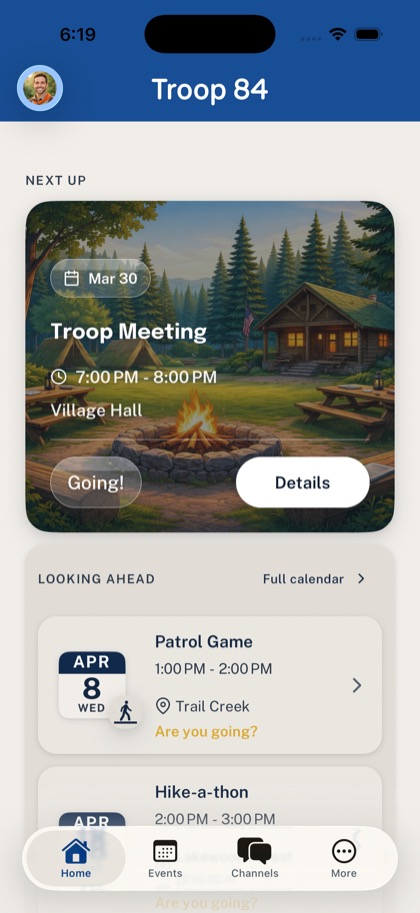
That is the same promise behind the app: fewer scattered replies, clearer responsibility, and one calm place for the updates families and leaders actually need.
-
Household-aware RSVPs
See how real families are attending, not just scattered individual replies.
-
Volunteer roles and signups
Keep campouts, meetings, and events staffed before the scramble starts.
-
High-signal communication
Put updates where leaders and parents can actually find them again.
Sources
Citations and reference material
The historical claims on this page are backed by the references below.
- Wikipedia: Woggle
- Wikipedia: Neckerchief (Scouting section)
- The Scout Association: Scout youth sections and adult leader uniform development timeline
- World Organization of the Scout Movement: Wood Badge
- Scouting America: Cub Scout Uniform
- User-supplied photo of a Turk's head neckerchief slide
- Wikimedia Commons: Golden Spatula neckerchief slide
- Wikimedia Commons: Scout Law Book Neckerchief Slide
- Wikimedia Commons: BSA standard metal slide
- Wikimedia Commons: Boy Scouts, New York City, 1917
- Editorial hero image created for this page
FAQ
Frequently Asked Questions
Short answers to the points that usually need a quick explanation.
What is a woggle in Scouting?
It is the ring or slide used to hold a Scout neckerchief in place. In many Scout communities, woggle is the standard term for what U.S. families often call a neckerchief slide.
Is a woggle the same as a neckerchief slide?
Usually, yes. The difference is mostly regional vocabulary, not function. In U.S. Scouting, neckerchief slide is more common, while woggle is common in many other Scout traditions.
What is a Gilwell woggle?
It usually means the leather Turk's head style associated with Gilwell Park and Wood Badge traditions for Scout leaders.
Why did Woggle choose this name?
We chose it because a woggle is a small thing that helps hold a unit's uniform together. Our app is meant to do the same job for events, households, volunteers, and communication.
Need one calmer place to keep your unit together?
Join Early Access to see how Woggle handles RSVPs, volunteer roles, announcements, and family coordination for real-world Scouting groups.